


What You'll Discover:
- Why sales culture makes drinking feel like part of the job.
- What alcohol does to the memory and judgment that close deals.
- How travel and conference season change the pattern.
- The difference between being the fun one and being the trusted one.
- Practical scripts for client dinners that keep the relationship strong.
- How naltrexone can help you stay in control on nights that involve drinking.
Sales has its own drinking script. The steakhouse dinner, the hotel bar after day two of the conference, the bottle of champagne when the contract finally comes back signed.
None of that is a problem in itself. Plenty of great business relationships have been built over a drink, and nobody is suggesting you stop entertaining.
But the script carries costs that never show up on a quota report. The follow-up you forgot to send. The 8 a.m. call you were foggy for. The third conference in a row you came home completely drained.
So, this guide treats drinking in sales as a performance question. Sharper relationships, better recall, and more stamina without the hangover are real advantages, and they compound over a career.
Why Sales Culture Makes Drinking Feel Like Part of the Job
Start with an honest admission. There is no reliable national figure for how much salespeople drink compared with other professions, so be skeptical of anyone who quotes one with confidence.
What the research does show is how strongly workplace culture shapes individual drinking.
A national survey of 2,430 employed adults looked at workplace norms around alcohol. What coworkers approve of predicted how much employees drank, and how impaired they got, across every context studied.
That included drinking after work, not just on the job.
In plain terms, the team sets the pour. If your sales floor celebrates every closed deal with shots, your own drinking drifts toward that baseline without you ever deciding it should.
Sales layers a few specific pressures on top of that culture.
Relationship selling. Deals happen over meals, and the entertainment budget exists to be spent. Saying yes to dinner often means saying yes to the wine list.
Constant celebration. Wins are frequent, public, and usually marked with a round. The bigger the deal, the bigger the bottle.
Quota stress. The swing between a great month and a brutal one is emotional as well as financial. Alcohol is a fast way to take the edge off either one.
Travel. Hotel bars, airport lounges, and per diems put alcohol within reach on the road, far from the routines that usually keep it in check.
None of these make salespeople the problem. They make drinking the default, and defaults are powerful precisely because nobody chooses them.
The Expectation of Being the Fun One
A lot of people in sales are good at it because they are good with people. Warm, quick, energetic, the person who keeps the whole table laughing.
Somewhere along the way, being the fun one and being the one who drinks can merge into the same job description.
Here is the thing clients rarely say out loud. They enjoy the fun one at dinner. They trust the one who calls back the next morning with exactly what was promised.
Those are not always the same person, and the second one usually wins the renewal.
You can stay the most engaging person at the table with a half-full glass. Energy, curiosity, and good questions do far more work in a client relationship than a matching pour ever has.
We cover the mechanics in our guide to drinking at networking events, including how to stay present in a room where everyone else is a few drinks in.
What Alcohol Does to the Skills That Close Deals
The best client dinners are where the real information comes out. The budget timing, the skeptical boss, the competitor they are frustrated with, the expansion they hinted at over dessert.
That information is only valuable if you remember it.
According to the NIAAA's fact sheet on alcohol-induced blackouts, alcohol can temporarily block the transfer of memories from short-term to long-term storage in a brain area called the hippocampus.
The most common version is a fragmentary blackout, with islands of memory separated by gaps. You remember the steak and the big laugh. You do not remember the number they mentioned.
The same fact sheet notes that blackouts are more likely when you drink on an empty stomach or drink quickly. That is a fair description of the cocktail hour before a dinner reservation.
Memory is not the only thing affected. NIAAA also lists impulse control, attention, judgment, and decision-making.
In sales, that is the moment you offer a discount nobody asked for, or promise a delivery date that operations cannot possibly hit.
The Morning After the Client Dinner
Even when you remember the dinner perfectly, the next morning carries its own cost.
A systematic review of the next-day effects of heavy drinking pooled 19 studies with 1,163 participants. Its meta-analysis found impairments in short-term memory, long-term memory, sustained attention, and psychomotor speed during a hangover.
Those effects showed up after blood alcohol had returned to near zero. You can be fully sober and still running at a deficit.
Now map that onto the day after a big dinner. The follow-up email that should capture every detail. The pipeline review with your manager. The discovery call with a new prospect who deserves your best.
That is the hidden tax of the sales drinking script. The dinner may build the relationship, but the morning after is usually where you are supposed to turn it into revenue.
Our guide to alcohol and work performance breaks down how these small next-day costs add up across a full quarter.
Travel, Conferences, and the Hotel Bar
Travel changes the drinking math more than most people realize. Your routine disappears, your evenings are unstructured, and the hotel bar is always one elevator ride away.
A Columbia University study of employee health records found that people traveling 21 or more nights a month for work were about twice as likely to score above a clinical screening threshold for alcohol dependence.
The comparison group was people who traveled one to six nights a month.
The CDC's guidance for international business travelers notes that extensive business travel is linked to higher stress and anxiety.
It also advises travelers to limit or skip in-flight alcohol, especially when work is scheduled on or close to arrival. That logic applies to a cross-country flight before a pitch just as much as an international one.
Conference week is the hardest version. Three or four nights in a row of open bars, client dinners, and after-parties, followed by a booth shift at 8 a.m.
A simple strategy beats willpower here. Choose the one night that matters most for relationships and go all in socially. On the others, book an early breakfast meeting so you have a built-in reason to leave the bar.
The Sales Drinking Script vs. What Actually Closes Deals
| The sales drinking script | What actually closes deals |
|---|---|
| Match the client drink for drink | Order first and set an easy pace, since clients rarely track your glass |
| Close the hotel bar every conference night | Pick one big night, then own the 7 a.m. breakfast meeting |
| Celebrate every win with a round | Celebrate with something the team still remembers the next day |
| Be the fun one at dinner | Be the one who remembers every detail the client shared |
| Recover from the dinner on the next morning's call | Send a sharp, specific follow-up email before 9 a.m. |
Scripts for Client Dinners That Keep the Relationship Strong
Most people worry that drinking less will make them seem stiff, judgmental, or less fun. In practice, almost nobody notices, as long as you stay engaged.
A few approaches make it easy.
Order first. Whatever you order sets the tone. Sparkling water with lime, a zero-proof cocktail, or one glass of wine you nurse all night all look the same from across the table.
Use a short, true reason, or none at all. "Early call tomorrow" or "I'm pacing myself tonight" is plenty. The less you explain, the less anyone thinks about it.
Take the host role seriously. When you host, you control the order, the food, and the pace. Get appetizers on the table early, which also solves the empty-stomach problem.
Make the toast with whatever is in your glass. Nobody remembers what was in it. They remember what you said.
Capture the details. Step away during dinner and text yourself the three most important things the client told you. It is a small habit that pays off the next morning.
Over a career, these habits shape your reputation as much as any single deal. We take the long view in our article on how alcohol affects your career.
What You Gain When You Drink Less on the Road
The case for drinking less in sales is not moral. It is competitive.
Sharper relationships. You catch the hesitation in a client's voice, the name of their new VP, and the off-hand comment about next year's budget. Those details are what make a follow-up feel personal.
Better recall. Your notes are accurate, your CRM is current, and your proposal reflects what was actually said at dinner rather than what you think was said.
More stamina. A four-day conference stops being something you survive. You are as sharp on day four as you were on day one, which is usually when the best conversations happen.
All that said, none of this requires going to zero. For most people in sales, the win is simply being in control of the second and third drink.
Quota Stress and the Drink at Home
Not all drinking in sales is social. Some of it happens alone, at home, after a day of rejections or the last week of a quarter that is not going to close.
That kind of drinking is less visible and often more automatic. It is a way to come down from a job that runs on adrenaline and uncertainty, and it can grow quietly for a long time.
If you work on commission or run your own book of business, the pressures overlap with what we describe in our piece on entrepreneurs and drinking, where income is tied to results you never fully control.
A simple test helps. Track every drink for two weeks, including the ones at home, and note which were social and which were stress. The split is usually revealing.
Where Naltrexone Fits for People Who Still Entertain
You do not need to quit drinking to get help, and you do not need a label. For a lot of sales professionals, the goal is control, not abstinence.
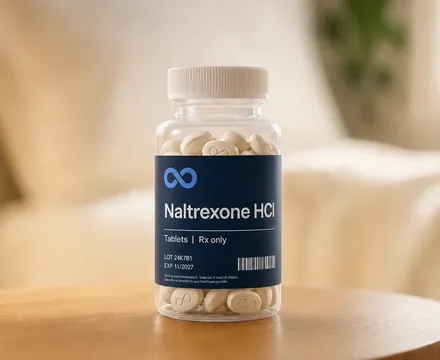
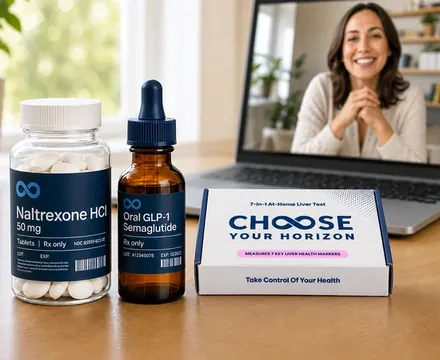
Naltrexone is an oral medication, typically a 50mg tablet, FDA approved for alcohol use disorder since 1994. It is an opioid antagonist that blocks the mu-opioid receptor, which dampens the reward signal alcohol produces in the brain.
That makes it well suited to how salespeople actually drink. Taken about an hour before a client dinner, as your physician advises, it blunts the pull of the second and third drink.
You can still raise a glass. It just becomes much easier to stop at one or two. Some people take it daily instead, and most notice a difference within 2-4 weeks.
Of course, your prescriber reviews your history first, including any current opioid use, since naltrexone and opioids do not mix. A physician-guided plan can include other options when they fit, such as a GLP-1 medication in some cases.
If you drink heavily every day, talk to a clinician before stopping suddenly, because alcohol withdrawal can be serious. Seek emergency care for confusion, seizures, or hallucinations.
With Choose Your Horizon, everything happens online. Consultations are by message, medication ships in discreet packaging, and nothing runs through your employer.
Naltrexone is paired with coaching and ongoing support as part of an integrated solution grounded in clinical, neurological, and behavioral science.
The Bottom Line for Sales Professionals
Sales culture makes drinking feel like part of the job. The team sets the pour, travel removes the structure, and every win seems to arrive with a round.
But the skills that actually close deals are memory, judgment, and energy, and alcohol chips away at all three. The client remembers who followed up with every detail.
Drinking less does not mean entertaining less. It means showing up sharper at dinner and sharper the next morning, which is where relationships turn into revenue.
If you want support beyond willpower, medication paired with coaching is one of the best-evidenced tools available. And it fits around a calendar full of dinners and flights.
Frequently Asked Questions
Do I have to drink to succeed in sales?
No. Clients care far more about whether you listen, follow up, and deliver than about what is in your glass. Plenty of strong performers drink lightly or not at all.
How do I turn down a drink with a client without it being awkward?
Order first, choose something that looks like a drink, and keep the reason short, like "early call tomorrow." Most people will not notice or ask.
How can I drink less at conferences?
Pick the one night that matters most and enjoy it. On the other nights, schedule an early breakfast meeting, which gives you a natural reason to leave the bar.
Can I take naltrexone before a client dinner?
Many people take it about an hour before an event where they expect to drink, as their physician advises. It blunts the reward of alcohol, so stopping at one or two gets easier.
Will my company know if I get help for drinking?
You sign up with Choose Your Horizon directly, with no employer involvement. Consultations happen online and medication ships in discreet packaging.
Find out whether naltrexone could help you stay sharp on the nights that count. Take the online Alcohol Use Assessment privately, in a few minutes, from anywhere.
A private, physician-led plan to drink less or quit.
Medication, coaching and support from home. A short assessment is the first step.
Start Assessment