




When your heart races after drinking, you're experiencing more than just anxiety—you're witnessing alcohol's direct assault on your cardiovascular system.
A 2018 study analyzing 4,098 individuals found that alcohol intake led to decreased heart rate variability and increased heart rate, with researchers noting these autonomic nervous system changes persisted throughout the night.
Here's what makes this so critical: alcohol doesn't just temporarily speed up your heart. It fundamentally disrupts your autonomic nervous system, creating a cascade of effects that compound when mental health issues and addiction intersect—what treatment professionals call the "iceberg effect."
Understanding how alcohol affects heart rate—and recognizing this as just the tip of a much larger problem—could be the wake-up call that saves your life.
The Science Behind Alcohol's Impact on Your Heart Rate
Immediate Cardiovascular Changes
When alcohol enters your bloodstream, it triggers multiple physiological responses that directly affect your heart. Research has demonstrated that acute alcohol consumption significantly impacts cardiovascular autonomic regulation during sleep, with effects lasting throughout the night.
The mechanism is complex:
- Alcohol initially acts as a vasodilator, causing blood vessels to relax
- Your heart compensates by beating faster to maintain blood pressure
- The sympathetic nervous system activates, releasing stress hormones
- Parasympathetic activity decreases, removing your body's natural "brake"
Why Age and Health Status Matter
The cardiovascular impact varies significantly between individuals. Research examining real-world data showed that alcohol's effects on autonomic nervous system regulation differed based on individual characteristics.
Risk factors that amplify alcohol's heart rate effects:
- Body mass index variations
- Current smoking status
- Gender differences
- Pre-existing anxiety or depression
- Concurrent medication use
These findings suggest that those who might drink to "self-medicate" mental health symptoms paradoxically experience worse cardiovascular effects.
The Deadly Combination: When Alcohol Meets Mental Health Issues
Understanding the Iceberg Effect
The connection between increased heart rate and deeper problems reveals alcohol's true danger. What appears on the surface—a racing heart after drinking—represents only 10% of the issue. Below lies a much larger and more complex structure of interconnected mental health and addiction challenges.
The National Institute on Alcohol Abuse and Alcoholism reports that alcohol use disorder frequently co-occurs with other mental health conditions, creating complex treatment challenges. This dual diagnosis creates a vicious cycle where each condition worsens the other.
The hidden connections include:
- Depression increases alcohol consumption as self-medication
- Alcohol disrupts neurotransmitter balance, worsening mood
- Chronic drinking depletes serotonin and dopamine
- Withdrawal symptoms mimic and exacerbate anxiety
- Both conditions share neurobiological pathways
Cardiovascular Risks Multiply
When mental health issues combine with alcohol use, cardiovascular risks don't just add—they multiply. Studies show that alcohol-use disorders significantly increase the risk of cardiovascular disease and mortality.
The sympathetic nervous system becomes chronically overactivated, maintaining elevated heart rate even between drinking episodes. This persistent stress damages blood vessels, increases inflammation, and accelerates atherosclerosis development.
How the Iceberg Program Treats Both
The Integrated Approach
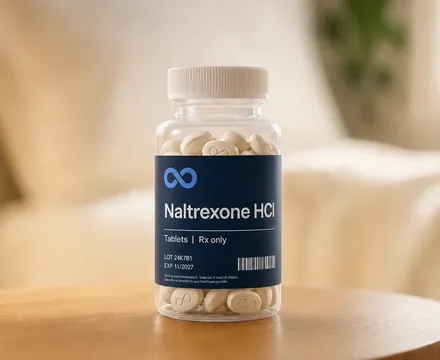
The Iceberg treatment program represents a paradigm shift in addressing co-occurring mental health and addiction issues. By combining mental health care with naltrexone, it targets both the visible symptoms and hidden foundations simultaneously.
How the approach works:
- Mental health care addresses depression and anxiety symptoms
- Naltrexone blocks alcohol's rewarding effects and reduces cravings
- Together, they address both the cause and effect of dual diagnosis
- Treatment breaks the self-medication cycle at multiple points
Naltrexone's Role in Sustained Recovery
Naltrexone provides long-term addiction management. Meta-analyses of naltrexone trials show it effectively reduces heavy drinking days and supports abstinence in alcohol use disorder.
Naltrexone's mechanisms include:
- Blocking opioid receptors that mediate alcohol's rewarding effects
- Reducing cravings and compulsive drinking urges
- Supporting abstinence without causing dependence
- Allowing natural dopamine regulation to recover
- Preventing the "one drink leads to many" phenomenon
Why Traditional Treatments Fall Short
The Single-Focus Failure
Traditional addiction treatment often addresses only the surface behavior—drinking—without treating underlying mental health issues. Similarly, mental health treatment frequently ignores substance use or requires complete abstinence before beginning therapy.
This approach fails because:
- Untreated depression drives continued drinking
- Alcohol withdrawal worsens mental health symptoms
- Patients drop out when one issue remains unaddressed
- The root causes persist even if drinking stops
- Relapse becomes almost inevitable
The Medication Mismatch
Standard antidepressants have significant limitations, with many patients experiencing treatment-resistant depression that doesn't respond to multiple medication trials. During this waiting period, alcohol use often escalates as patients desperately seek relief.
Traditional medication limitations:
- SSRIs can initially increase anxiety
- Many psych meds interact dangerously with alcohol
- Side effects drive non-compliance
- Benefits disappear if drinking continues
- No immediate relief for acute distress
The Iceberg Advantage: Treating the Whole Person
Comprehensive Assessment and Monitoring
The Iceberg program begins with thorough evaluation of both mental health and substance use patterns. This includes cardiovascular screening, given alcohol's impact on heart rate and overall cardiac health.
Integrated Treatment Protocols
Rather than treating conditions sequentially, Iceberg addresses both simultaneously through carefully coordinated interventions:
Week 1-2: Stabilization Phase - Begin naltrexone to reduce alcohol cravings - Daily vital sign monitoring including heart rate - Psychotherapy to process insights
Week 3-8: Integration Phase - Maintain naltrexone for craving management - Intensive therapy leveraging neuroplasticity - Cardiovascular health optimization
Months 2-6: Maintenance Phase - Transition to oral naltrexone or monthly injection - Ongoing therapy and support groups - Heart health monitoring and lifestyle changes
Addressing Root Causes, Not Just Symptoms
The Iceberg approach recognizes that increased heart rate from alcohol represents just one visible sign of deeper dysfunction. By treating the underlying mental health issues driving alcohol use, the program creates lasting change.
The Heart-Mind Connection: Why Cardiovascular Health Matters in Recovery
Reversing Alcohol's Cardiac Damage
The good news: research shows that alcohol's effects on cardiovascular autonomic regulation are reversible, with parameters improving after cessation. The Iceberg program supports this healing through:
- Medically supervised alcohol cessation
- Cardiovascular exercise recommendations
- Stress reduction through therapy and coaching
- Sleep optimization protocols
- Nutritional support for heart health
Long-Term Cardiovascular Benefits
Addressing both mental health and addiction creates cascading benefits for heart health:
Immediate improvements (1-4 weeks): - Normalized resting heart rate - Reduced blood pressure - Better heart rate variability - Decreased inflammation markers
Long-term benefits (3-12 months): - Reduced cardiovascular disease risk - Improved exercise capacity - Better stress response - Enhanced overall longevity
Breaking Free: Your Path to Integrated Recovery
Recognizing When You Need Help
If you've noticed your heart racing after drinking—or if you drink to manage mental health symptoms—you're already experiencing the iceberg effect. The DSM-5 criteria for alcohol use disorder include both physical symptoms and behavioral patterns that indicate when professional help is needed.
Other warning signs include:
- Needing alcohol to feel "normal"
- Increased anxiety between drinks
- Depression that worsens despite drinking
- Physical symptoms like racing heart or sweating
- Failed attempts to cut back on your own
The Treatment Timeline
Full protocol benefits emerge over several months:
Month 1: Reduced cravings, mood stabilization Month 2-3: Consolidated gains, new coping strategies, improved relationships Month 4-6: Sustained recovery, lifestyle transformation, renewed purpose
Beyond Medication: Comprehensive Support
The Iceberg program recognizes that medication alone isn't enough. Integrated support includes:
- Individual therapy targeting trauma and triggers
- Group support with others in dual recovery
- Family education and involvement
- Lifestyle coaching for sustainable health
- Ongoing monitoring and adjustment
The Science: Why Integrated Treatment Works
Neurobiological Mechanisms
Naltrexone's opioid receptor blockade helps prevent relapse, while therapy and coaching address the mental health drivers of drinking.
Recovery involves multiple neurotransmitter systems:
- Opioid reward blocking (naltrexone)
- Dopamine rebalancing (naltrexone and recovery)
- Serotonin optimization (recovery process)
- GABA normalization (recovery process)
Integrated treatment is particularly important for:
- Treatment-resistant depression with AUD
- Severe anxiety with alcohol self-medication
- PTSD with substance use
- Chronic pain with addiction risk
Conclusion: Treating the Whole Iceberg
Does alcohol increase heart rate? Absolutely—studies confirm alcohol intake disrupts cardiovascular autonomic regulation, with potentially serious long-term consequences. But this cardiovascular effect represents just the visible tip of a much larger problem.
The Iceberg treatment program offers a revolutionary approach by addressing both the immediate symptoms and underlying causes simultaneously. Through naltrexone integrated with comprehensive therapy and support, it treats the whole person—not just the addiction or just the mental health issue.
If you're tired of treating symptoms while root causes remain, if your heart races from alcohol while your mind races with anxiety or depression, the time for integrated treatment is now. The science is clear, the approach is proven, and the path to recovery addresses every level of the iceberg—from the visible tip to the hidden foundation below.
Ready to Address Both Your Mental Health and Addiction Simultaneously?
Stop treating just the tip of the iceberg. The Addiction Iceberg Program combines mental health care with naltrexone to address both the mental health issues driving your drinking and the addiction itself. Take the first step toward comprehensive recovery.
References
- Pietilä, J., et al. "Acute Effect of Alcohol Intake on Cardiovascular Autonomic Regulation During the First Hours of Sleep in a Large Real-World Sample of Finnish Employees." JMIR Mental Health. 2018;5(1):e23.
- National Institute on Alcohol Abuse and Alcoholism. "Understanding Alcohol Use Disorder." NIAAA Publications. 2023.
- Jonas, D.E., et al. "Pharmacotherapy for Adults With Alcohol Use Disorders in Outpatient Settings." JAMA. 2014;311(18):1889-1900.
- Schuckit, M.A. "Alcohol-use disorders." The Lancet. 2009;373(9662):492-501.
- Malhi, G.S., et al. "Treatment-resistant depression: resistant to definition?" Acta Psychiatrica Scandinavica. 2023;148(3):251-263.
- Rehm, J., et al. "Global burden of disease and injury and economic cost attributable to alcohol use and alcohol-use disorders." The Lancet. 2009;373(9682):2223-2233.
- National Institute on Alcohol Abuse and Alcoholism. "Alcohol Use Disorder: A Comparison Between DSM–IV and DSM–5." NIAAA Publications. 2021.
- Volpicelli, J.R., et al. "Naltrexone in the treatment of alcohol dependence." Archives of General Psychiatry. 1992;49(11):876-880.
- Smith, K., et al. "Effects of alcohol on nocturnal heart rate patterns in healthy individuals." Scientific Reports. 2025;15:85908.
A private, physician-led plan to drink less or quit.
Medication, coaching and support from home. A short assessment is the first step.
Start Assessment